

Cannabis Legalization Updates 2024: State-Level Changes Reshape the Legal Landscape
The cannabis legalization movement reached new heights in 2024, with significant developments across multiple states that have fundamentally altered the legal landscape for consumers. As we navigate through these changes, understanding the current state of cannabis laws 2024 becomes crucial for both existing users and those considering entering the legal cannabis market.
Major State Legalization Milestones
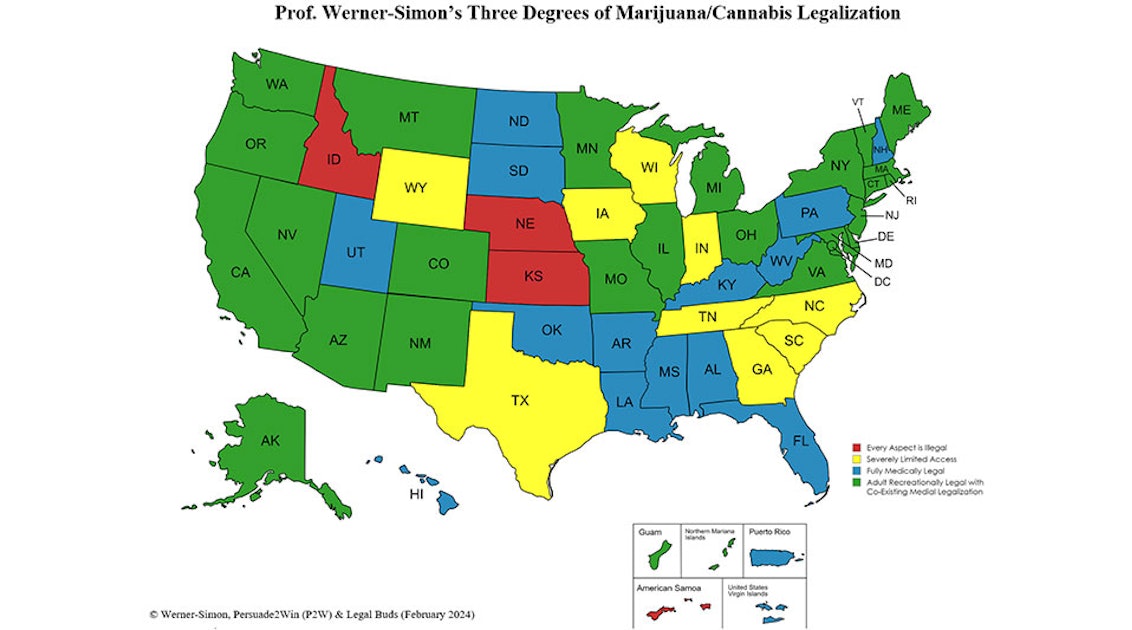
Ohio's historic vote on November 7, 2023, marked a pivotal moment in marijuana legalization news, with the state becoming the 24th to legalize adult-use cannabis. The law, which took effect on December 7, 2023, allows adults aged 21 and older to purchase and possess up to 2.5 ounces of cannabis flower and cultivate up to six plants at home. This development significantly expanded the roster of cannabis legal states in the Midwest, creating new opportunities for consumers and businesses alike.
Minnesota followed suit with comprehensive legislative refinements in May 2024, implementing a sophisticated "vetted lottery" system for cannabis business licenses. This approach prioritizes social equity applicants, addressing historical injustices while ensuring market diversity. The state's early issuance of cultivation licenses demonstrates a proactive approach to preventing supply shortages that have plagued other newly legal markets.
Current Legal Status Across States
The patchwork of cannabis regulations continues to evolve, creating a complex landscape for consumers to navigate. As of 2024, the distinction between medical and recreational programs has become increasingly important for understanding consumer rights and access.
Cannabis Legal Status by State - 2024 Updates
| State | Legal Status | Possession Limit | Home Cultivation | Implementation Date |
|---|---|---|---|---|
| Ohio | Adult-Use Legal | 2.5 ounces | 6 plants per person | December 7, 2023 |
| Minnesota | Adult-Use Legal | 2 ounces flower | 8 plants per person | August 1, 2023 |
| Delaware | Adult-Use Legal | 1 ounce flower | No home cultivation | April 23, 2023 |
| Maryland | Adult-Use Legal | 1.5 ounces flower | 2 plants per person | July 1, 2023 |
| Missouri | Adult-Use Legal | 3 ounces flower | 6 flowering plants | February 6, 2023 |
| Rhode Island | Adult-Use Legal | 1 ounce flower | 6 plants per person | December 1, 2022 |
| Connecticut | Adult-Use Legal | 1.5 ounces flower | 6 plants per person | July 1, 2021 |
| New York | Adult-Use Legal | 3 ounces flower | 6 plants per person | March 31, 2021 |
These state-level changes have created significant implications for interstate commerce and consumer mobility. While federal cannabis policy remains restrictive, the growing number of legal states has intensified pressure for nationwide reform. Consumers traveling between states must remain vigilant about varying possession limits, consumption regulations, and reciprocity agreements.
Regulatory Framework Evolution
The cannabis regulations landscape in 2024 reflects a maturing industry with increasingly sophisticated oversight mechanisms. States are moving beyond simple legalization toward comprehensive regulatory frameworks that address taxation, quality control, social equity, and public safety concerns.
Ohio's implementation strategy exemplifies this evolution, with the state establishing clear guidelines for retail operations, product testing requirements, and advertising restrictions. The 10% excise tax on adult-use sales, combined with existing state sales tax, creates a revenue model that other states are closely monitoring.
Minnesota's approach to social equity represents a significant advancement in cannabis regulations, with the vetted lottery system designed to ensure that communities disproportionately impacted by prohibition benefit from legalization. This model includes provisions for technical assistance, reduced licensing fees, and priority processing for qualifying applicants.
Consumer Impact and Market Access
For consumers, these legalization updates translate into expanded access, improved product quality, and enhanced safety protections. The establishment of regulated markets eliminates many risks associated with illicit purchases while providing consumers with detailed product information, lab testing results, and standardized dosing guidelines.
The home cultivation provisions in states like Ohio represent a significant shift toward consumer autonomy, allowing individuals to grow their own cannabis for personal use. This development reduces long-term costs for regular users while providing greater control over product quality and strain selection.
Cumulative Growth of Legal Cannabis States (2020-2024)
However, the expanding legal landscape also creates challenges for consumers, particularly regarding banking services, employment protections, and federal law conflicts. While state laws provide protection within their borders, federal prohibition continues to create uncertainty for consumers in areas such as firearm ownership, federal employment, and interstate travel.
The momentum behind state-level legalization in 2024 sets the stage for continued expansion and potential federal policy changes. As more states join the ranks of cannabis legal states, the pressure for comprehensive federal reform intensifies, promising further developments that will reshape the industry and consumer experience in the coming years.
Federal Cannabis Policy Developments and Their Consumer Impact
While state-level cannabis legalization continues to expand across the United States, federal cannabis policy remains a complex web of evolving regulations that directly affects consumers, businesses, and interstate commerce. The disconnect between state and federal laws creates unique challenges and opportunities that every cannabis consumer should understand.
Current Federal Cannabis Classification and Recent Policy Shifts
Cannabis remains classified as a Schedule I controlled substance under federal law, creating a legal paradox where states can legalize cannabis while it remains federally prohibited. However, 2024 has brought significant developments in federal cannabis policy that signal potential changes ahead.
The Biden administration has maintained a hands-off approach to state-legal cannabis operations, continuing the Cole Memorandum principles that prioritize federal enforcement resources on serious cannabis crimes rather than state-compliant businesses. This policy stance has provided crucial stability for the cannabis industry and consumer access in legal states.
Banking and Financial Services: The SAFE Banking Act Progress
One of the most significant federal issues affecting cannabis consumers is banking access. The Secure and Fair Enforcement (SAFE) Banking Act has gained renewed momentum in 2024, with bipartisan support in Congress. Currently, most banks avoid working with cannabis businesses due to federal prohibition, forcing many dispensaries to operate as cash-only establishments.
This banking limitation creates several consumer impacts including limited payment options, security concerns at dispensaries, difficulty with online ordering systems, and challenges with product returns and warranties. Several states have implemented workarounds, including state-chartered banks and credit unions willing to serve cannabis businesses, but federal banking reform remains the ultimate solution.
Interstate Commerce Restrictions and Consumer Access
Federal prohibition prevents interstate cannabis commerce, meaning each state must develop its own supply chain from cultivation to retail. This restriction significantly impacts consumers through higher prices due to limited competition, inconsistent product availability between states, inability to transport legal cannabis across state lines, and varying product quality standards.
Some states have begun exploring interstate commerce compacts, which could allow cannabis trade between participating states once federal law permits. These agreements represent preparation for eventual federal legalization while highlighting current limitations consumers face.
Federal Tax Implications: Section 280E and Consumer Costs
Internal Revenue Code Section 280E prohibits cannabis businesses from deducting normal business expenses, forcing them to pay taxes on gross income rather than net profits. This federal tax burden significantly increases operational costs for cannabis businesses, which are typically passed on to consumers through higher retail prices.
Cannabis businesses often pay effective tax rates of 40-70%, compared to 15-25% for typical businesses. This tax disadvantage makes legal cannabis more expensive than it would be under normal tax treatment, potentially driving some consumers toward illicit markets where prices remain lower.
Federal Agencies and Cannabis Oversight
Multiple federal agencies maintain jurisdiction over different aspects of cannabis policy, creating a complex regulatory environment. The Drug Enforcement Administration (DEA) handles scheduling and enforcement, the Food and Drug Administration (FDA) oversees cannabis-derived pharmaceuticals like Epidiolex, the Department of Agriculture manages hemp cultivation under the 2018 Farm Bill, and the Treasury Department's FinCEN provides guidance on cannabis banking compliance.
This multi-agency approach often creates conflicting guidance and regulatory uncertainty that affects how consumers access cannabis products and services.
What Federal Changes Mean for Cannabis Consumers
Federal cannabis policy developments directly impact consumer experience in several ways. Banking reform would enable credit card payments and normal financial services at dispensaries. Interstate commerce allowance would increase product variety and potentially lower prices through competition. Federal legalization would standardize regulations and eliminate legal uncertainty for consumers traveling between states.
Tax reform removing Section 280E would likely reduce retail cannabis prices significantly. FDA involvement in cannabis regulation could improve product safety and quality standards while potentially creating more stringent testing requirements.
Understanding these federal policy implications helps consumers make informed decisions about cannabis purchases and advocacy efforts. As federal policy continues evolving, staying informed about these changes becomes increasingly important for anyone participating in legal cannabis markets.
Looking Ahead: Consumer Implications and Market Projections for Cannabis Legalization
As we move deeper into 2024, the accelerating pace of cannabis legalization creates both opportunities and challenges for consumers navigating this evolving landscape. The convergence of state-level reforms and potential federal policy shifts is reshaping how Americans access, purchase, and consume cannabis products nationwide.
Consumer Access and Market Evolution
The expansion of cannabis legal states in 2024 has fundamentally altered consumer access patterns. With Ohio's implementation of adult-use sales and Minnesota's refined regulatory framework, millions of additional Americans now have legal access to cannabis products. This expansion has created a more competitive marketplace, driving down prices in established markets while new states work to build their supply chains.
Interstate commerce remains a significant challenge for consumers, particularly those living near state borders. While some states have begun exploring interstate compacts for cannabis commerce, federal restrictions continue to limit cross-border transactions. This patchwork of regulations means consumers must remain vigilant about local laws when traveling, as possession limits, consumption rules, and product availability vary significantly between jurisdictions.
Federal Policy Timeline and Consumer Impact
The trajectory of federal cannabis policy continues to influence consumer confidence and market stability. Recent developments in congressional discussions and regulatory agency positions suggest potential changes ahead, though the timeline remains uncertain.
Banking access improvements have already begun benefiting consumers through increased payment options and enhanced security at dispensaries. As more financial institutions enter the cannabis space, consumers can expect expanded credit card acceptance, improved online ordering systems, and more sophisticated loyalty programs similar to those in traditional retail sectors.
Market Trends and Consumer Behavior
The maturation of cannabis markets in established legal states provides insights into long-term consumer trends. Data shows increasing preference for premium products, with consumers gravitating toward tested, branded items over commodity cannabis. This trend reflects growing consumer sophistication and comfort with cannabis products.
Product innovation continues to accelerate, with new consumption methods, dosing technologies, and therapeutic applications entering the market regularly. Consumers benefit from increased product diversity, better quality control, and more precise dosing options, particularly in edibles and concentrate categories.
Regulatory Compliance and Consumer Protection
Enhanced testing requirements and quality control measures implemented across newly legal states provide consumers with greater product safety assurances. Mandatory testing for pesticides, heavy metals, microbials, and potency has become standard, though specific requirements vary by state. Consumers should understand these protections and seek products from licensed, regulated sources to ensure safety and quality.
Social equity programs in states like Minnesota and ongoing efforts in other jurisdictions aim to address historical injustices while creating more diverse business ownership. These programs often result in unique product offerings and community-focused retail experiences that benefit consumers through increased competition and innovation.
What Consumers Should Expect
Looking ahead, consumers can anticipate continued market expansion, improved product quality, and potentially significant federal policy changes. The normalization of cannabis commerce means better customer service, more professional retail environments, and increased consumer protections similar to other regulated industries.
However, consumers must remain informed about evolving regulations, as changes in cannabis laws can affect everything from possession limits to consumption locations. Staying connected with local dispensaries, following state regulatory updates, and understanding federal developments will help consumers navigate this dynamic landscape effectively.
The cannabis legalization movement of 2024 represents more than policy change—it signifies a fundamental shift in how American consumers access and think about cannabis. As this transformation continues, informed consumers who understand both opportunities and limitations will be best positioned to benefit from the expanding legal cannabis marketplace.
No comments yet. Be the first to share your thoughts!