

The Automated Grow Room: 2026 Vision
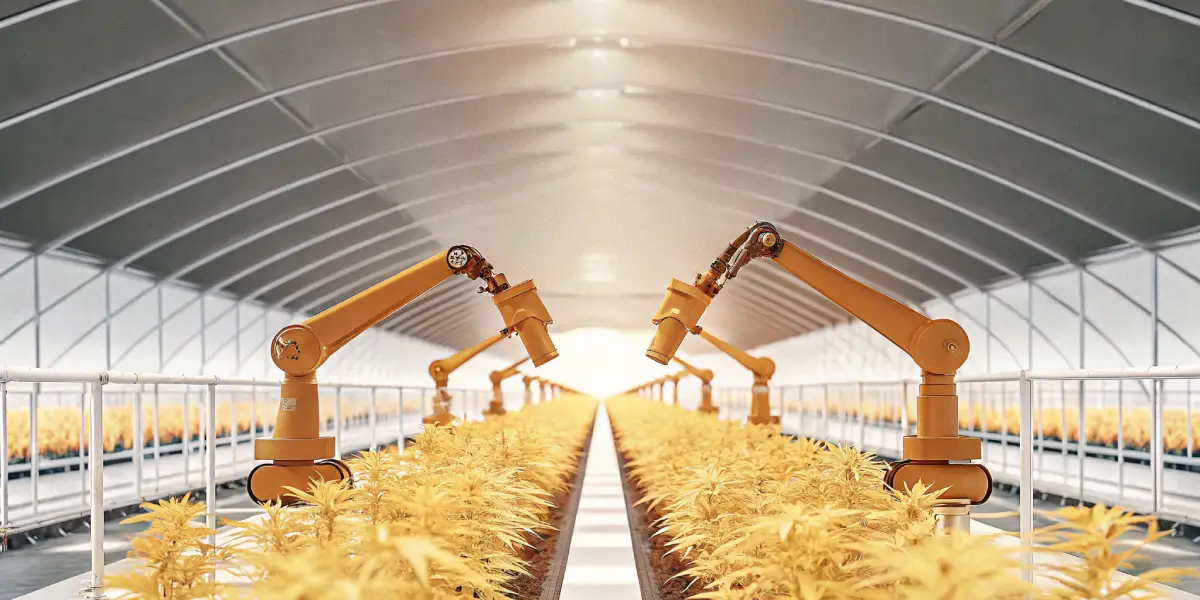
By 2026, your grow room will be a precisely calibrated environment, not a tangle of timers and guesswork. AI will subtly adjust CO2 levels, cycle lights through spectra tailored to plant development, and deliver nutrient solution directly to roots. This precision agriculture is the reality of the modern home grow, moving beyond the hobbyist era.
Interconnected sensors and AI algorithms now handle what once required constant monitoring and manual adjustments. The system learns from data, optimizing conditions for maximum yield and quality, a significant improvement over relying on intuition. California's revised regulations as of January 2026, pushing for greater data logging and accountability, also drive this sophistication, making automated systems attractive to small growers.
This automation empowers growers, freeing them to focus on plant selection, training techniques, and process refinement. It merges the art of cannabis cultivation with data. The 2026 grow room is a closed-loop system that monitors, adjusts, and learns for optimal results, reshaping the industry from commercial operations to home enthusiasts.
Sensors & Data: The Foundation of Smart Grows
A network of sensors collects data on the growing environment. By 2026, standard equipment will include environmental sensors for temperature, humidity, CO2, and light intensity/spectrum, providing the AI with a comprehensive picture for informed decisions.
Soil and hydroponic sensors monitor pH, electrical conductivity (EC), and moisture content, ensuring precise nutrient delivery. Advanced systems also use plant health sensors measuring chlorophyll levels, leaf temperature, and stem diameter to indicate plant vigor and stress.
This data feeds the AI system, which analyzes it to identify patterns, predict problems, and optimize growing conditions. Accurate, continuous data collection is essential for the AI. Continued innovation in sensor technology will focus on miniaturization, accuracy, and wireless connectivity.
AI-Powered Environmental Control
AI algorithms use sensor data to predict future environmental fluctuations and proactively adjust conditions. The AI manages timers and thermostats based on plant physiology and environmental factors.
The AI analyzes historical temperature and humidity data to predict deviations from ideal ranges and automatically adjusts ventilation, heating, or humidification. Lighting schedules dynamically adjust based on plant stage and natural sunlight. CO2 enrichment is optimized for photosynthesis without exceeding safe levels.
This surpasses traditional environmental controllers; an AI system can anticipate issues like heatwaves and adjust, unlike a simple timer. It learns from each grow cycle, refining algorithms for higher yields, improved quality, and reduced energy consumption. This represents a significant change in cannabis cultivation.
Nutrient Management & Automated Feeding
AI significantly impacts nutrient delivery, moving beyond the guesswork and periodic testing of traditional methods. AI systems use sensors to continuously monitor nutrient levels in soil or hydroponic solutions, allowing for precise, automated dosing.
Automated dosing systems connected to nutrient reservoirs adjust concentrations based on sensor readings and plant growth stage. The AI considers plant size, environmental conditions, and strain to determine the optimal nutrient mix, minimizing waste and reducing the risk of deficiencies or toxicities for healthier plants.
Benefits include increased yields, improved bud quality, and a more sustainable process. Eliminating guesswork and reducing waste saves growers money, offering a better approach than manual adjustments.
Disease & Pest Detection: Early Warning Systems
Early detection of disease and pests is crucial. AI-powered image recognition allows growers to identify problems before they cause significant damage by continuously monitoring plant leaves for visual symptoms via cameras.
AI algorithms trained on vast plant image datasets identify subtle changes in leaf color, shape, or texture, distinguishing between diseases and pests for accurate diagnoses. This improves upon time-consuming, error-prone manual inspection.
Some systems offer automated pest control. AI can trigger targeted spraying of pesticides or beneficial insects only on affected plants, minimizing chemical use and protecting the environment. This precision is a game-changer for sustainable cultivation.

Data Logging & Compliance: California's Lead
Increasing cannabis cultivation regulations, such as California's revised January 2026 rules requiring meticulous record-keeping, make data logging and compliance essential. AI-powered systems excel in this area.
These systems automatically log environmental conditions, nutrient usage, pest control, and plant growth metrics, creating a complete, auditable record. Automated reporting simplifies compliance report submission to regulators.
Beyond regulatory compliance, collected data optimizes growing practices and improves efficiency. Analyzing historical data helps growers identify trends and make informed decisions for future cycles. Automated audit trails offer protection during inspections or legal challenges.
The Cost of Entry: What Does It All Mean?
Implementing these technologies has a cost that varies with system size and complexity. Sensors range from a few dollars to hundreds, AI software subscriptions from a few hundred to thousands annually, and automated systems like dosing pumps and controllers add thousands to the upfront cost.
Installation costs can be substantial, especially for retrofitting existing rooms. However, increased yields, reduced costs, and improved quality can offset the initial investment, with reduced labor costs from automation being a major benefit.
Prices are decreasing as the technology becomes more widespread, with more affordable and user-friendly systems expected. A small-scale, sensor-focused setup might start around $1,500, while a fully automated system could exceed $10,000.
AI Integration Levels for Home Cannabis Cultivation (2026)
| AI Level | Initial Investment | Operational Complexity | Potential Yield | Regulatory Considerations |
|---|---|---|---|---|
| Basic (Sensors & Manual Adjustments) | Lowest | Moderate - Requires consistent grower attention & learning | Slightly Improved - Dependent on grower skill | Generally Compliant - Focus on tracking & documentation as per standard regulations |
| Intermediate (Automated Environmental Control) | Moderate | Lower - Automation handles core environmental factors | Improved - More consistent conditions promote better growth | Increased Scrutiny - Automated systems may require detailed records for compliance verification |
| Advanced (Full Automation & AI Optimization) | Higher | Lowest - System largely self-managing | Potentially Significant - AI optimizes for maximum yield and quality | Highest Scrutiny - Requires robust data logging and audit trails to demonstrate regulatory adherence & prevent diversion |
| Basic | Minimal equipment costs | Requires significant grower knowledge | Yield improvements are limited | Easier to demonstrate compliance with basic tracking |
| Intermediate | Moderate upfront investment | Reduced need for constant monitoring | More reliable and predictable yields | May require demonstrating system calibration and data accuracy |
| Advanced | Substantial initial cost | Minimal ongoing effort | Potential for maximized yield and quality | Requires comprehensive system documentation and potentially third-party audits |
Qualitative comparison based on the article research brief. Confirm current product details in the official docs before making implementation choices.
Future Trends: What's Next for AI & Cannabis?
The integration of AI and cannabis cultivation is still in its early stages. We can expect to see even more sophisticated technologies emerge in the coming years. Machine learning algorithms will be used to optimize breeding programs, identifying the most desirable traits and accelerating the development of new strains. This will allow growers to tailor their crops to specific consumer preferences.
Drones are also likely to play a larger role, providing automated monitoring of large-scale grows. Equipped with high-resolution cameras and sensors, drones can detect early signs of disease, pest infestations, and nutrient deficiencies. The integration of AI with blockchain technology could also revolutionize supply chain transparency, allowing consumers to track the origin and quality of their cannabis products.
The potential is enormous. While challenges remain – including the need for robust data security and the development of standardized data formats – the future of cannabis cultivation is undoubtedly intertwined with the power of artificial intelligence. It’s a cautiously optimistic outlook, driven by the promise of greater efficiency, sustainability, and quality. The industry is evolving rapidly, and those who embrace these technologies will be best positioned to thrive.


No comments yet. Be the first to share your thoughts!