

The 2026 federal cannabis landscape
As of 2026, cannabis remains classified as a Schedule I controlled substance under the federal Controlled Substances Act. This classification, maintained by the U.S. Drug Enforcement Administration (DEA), defines the substance as having a high potential for abuse and no currently accepted medical use in treatment. This federal stance creates a distinct legal baseline that operates independently of state-level reforms.
This separation means that while many states have legalized cannabis for medical or recreational use, those activities remain violations of federal law. The conflict between state and federal regulations creates a complex compliance environment for businesses and consumers. Understanding this dichotomy is essential for navigating the current regulatory framework, as federal enforcement priorities can shift regardless of state-level legality.
The persistence of Schedule I status at the federal level contrasts sharply with the growing number of states that have enacted their own cannabis laws. This divergence highlights the need for clear, up-to-date information on how federal regulations interact with state statutes. For those operating in or traveling through multiple jurisdictions, recognizing this legal distinction is the first step toward compliance.
Medical and recreational cannabis laws by state
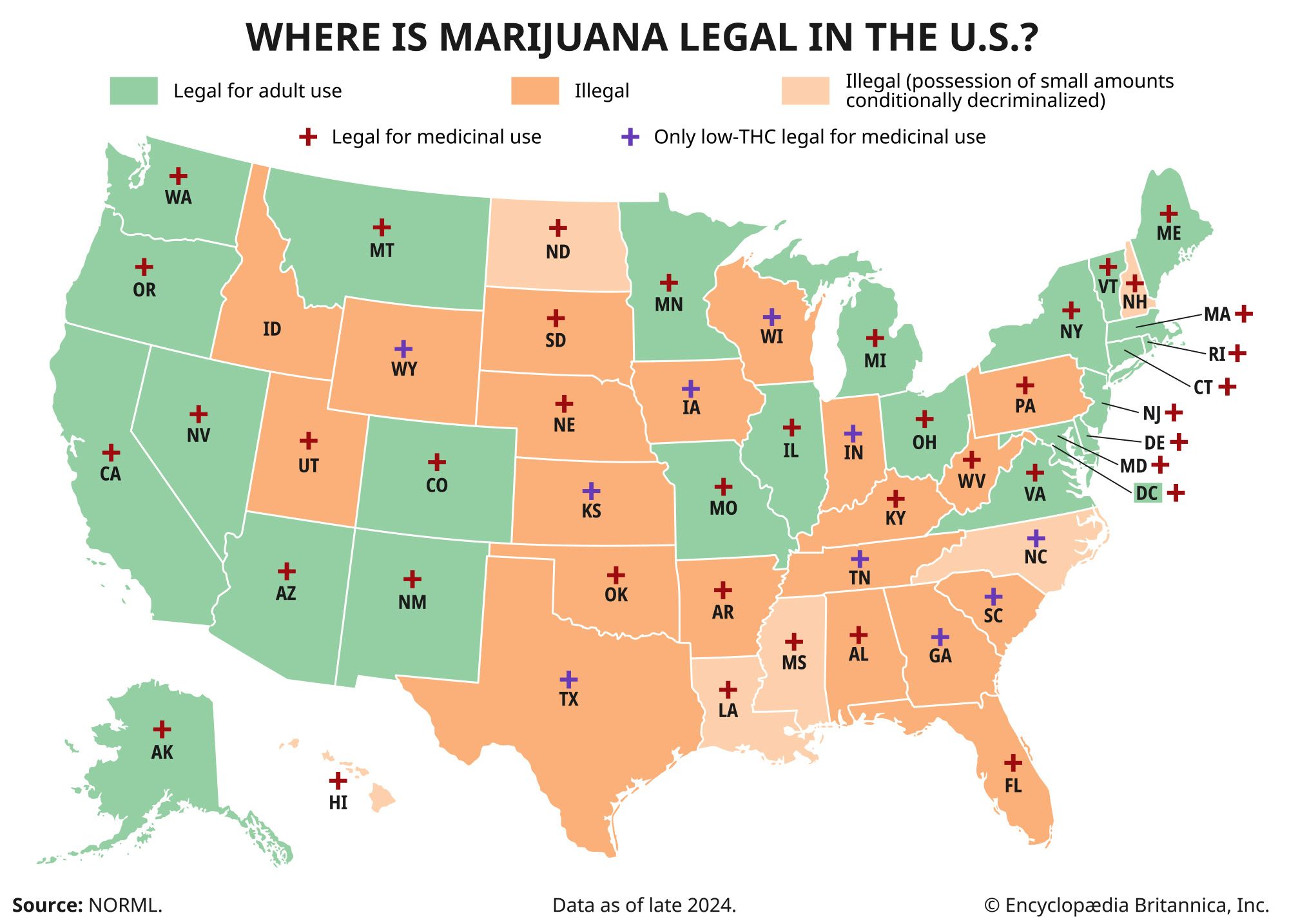
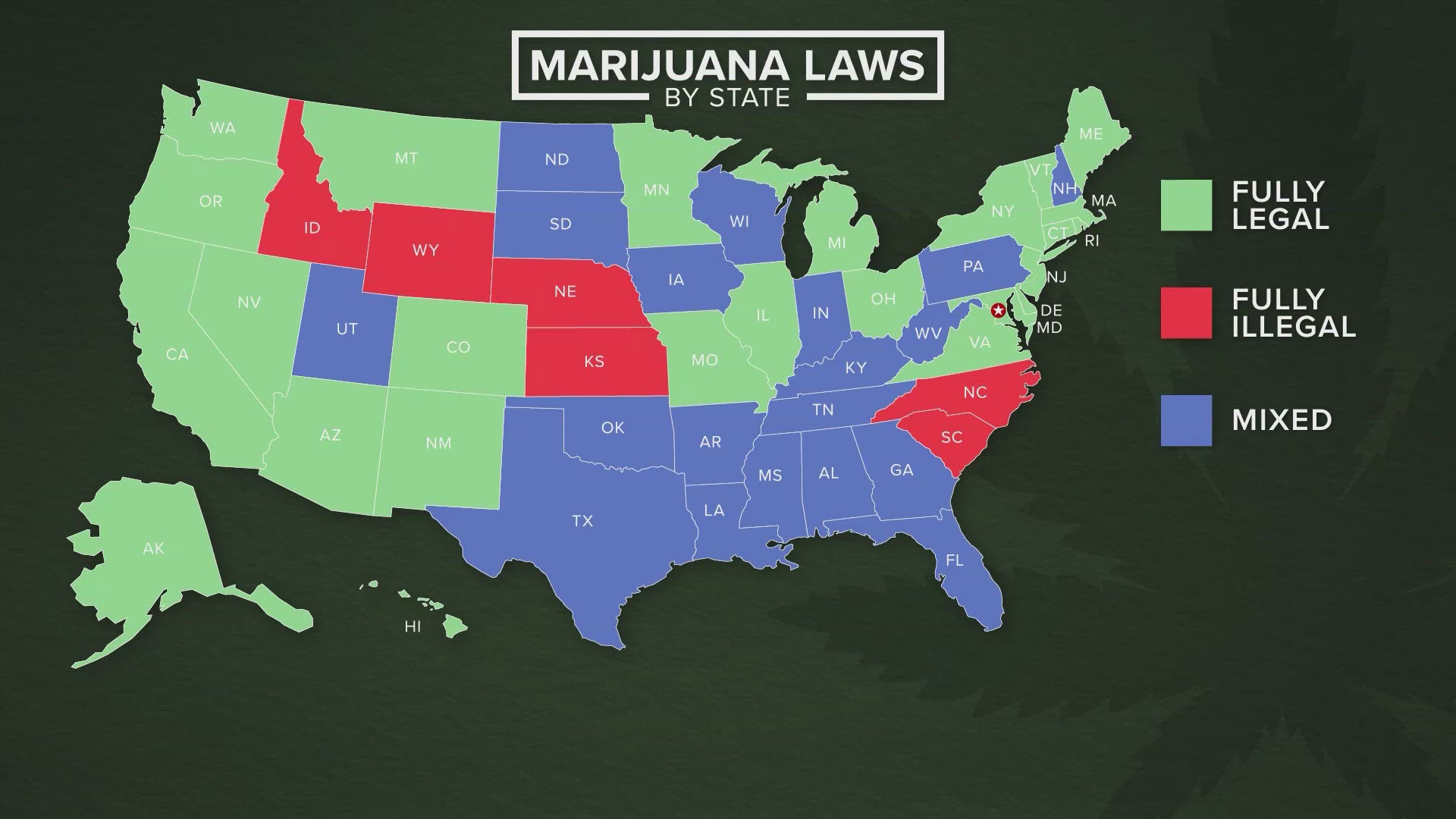
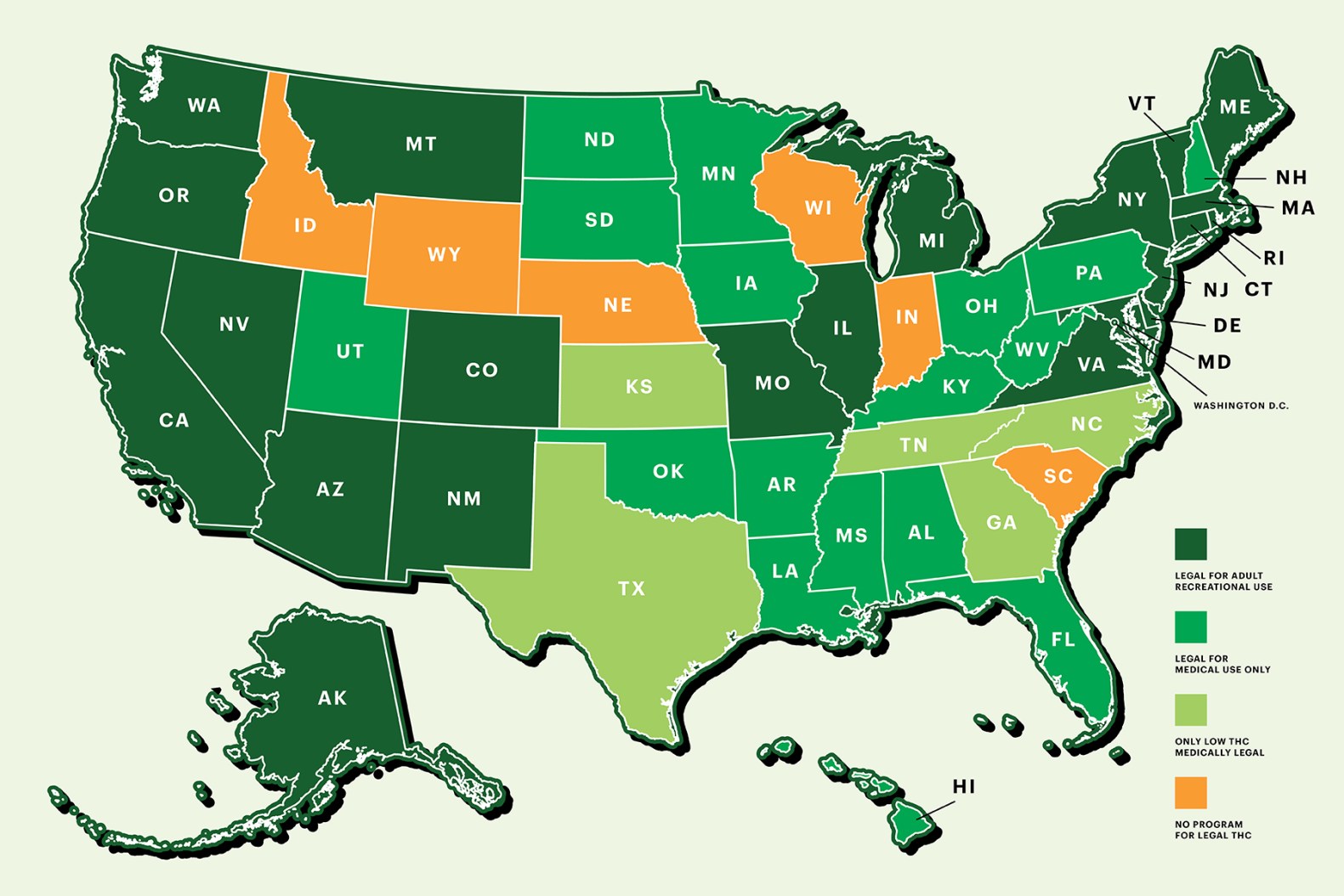
As of June 2025, the landscape of cannabis laws in the United States reflects a significant divergence between medical access and recreational permission. According to the National Conference of State Legislatures (NCSL), 41 states, three territories, and the District of Columbia have legalized medical cannabis use. This broad adoption establishes medical access as the baseline for most jurisdictions.
Recreational legalization remains a smaller subset. Only 24 states have fully legalized adult-use cannabis. This means that while the majority of the country permits medical patients to obtain cannabis through regulated programs, a smaller number of states allow adults to purchase and possess cannabis without a medical recommendation.
The following comparison highlights the current status across key jurisdictions, illustrating the gap between medical eligibility and recreational legality.
| Jurisdiction | Medical Legal | Recreational Legal | Status Notes |
|---|---|---|---|
| California | Yes | Yes | Pioneer in both categories |
| New York | Yes | Yes | Comprehensive adult-use law |
| Texas | Yes | No | Limited to low-THC cannabis |
| Florida | Yes | No | Expansion pending legislative action |
| Ohio | Yes | Yes | Approved via ballot initiative |
| Wyoming | No | No | Strict prohibition remains |
This split creates a complex compliance environment for consumers and businesses. Travelers and residents must verify the specific laws of each state, as possession limits and purchase rules vary significantly between medical and recreational frameworks.
Key state compliance differences
While federal shifts set the broader regulatory tone, cannabis laws in the United States remain a patchwork of state-specific statutes. Understanding these variations is essential for compliance, as rules regarding possession limits, cultivation rights, and age restrictions differ significantly across jurisdictions.
California
California legalized cannabis for both medicinal and adult use, establishing one of the most comprehensive regulatory frameworks in the country. Residents and visitors must navigate strict licensing requirements for retailers and cultivators. Possession limits generally allow for up to 28.5 grams of flower and 8 grams of concentrate for personal use, with home cultivation capped at four living plants per household, provided they are not accessible to minors or the public. California's cannabis laws provide detailed guidance on these restrictions.
Virginia
Virginia has moved toward legalization but maintains distinct limitations compared to fully recreational states. As of the latest updates, adults aged 21 and older may possess up to one ounce of cannabis for personal use. Home cultivation is permitted, allowing residents to grow up to four cannabis plants. Possession between one and four ounces incurs a civil fine rather than criminal charges. For a complete overview of these evolving statutes, refer to the Virginia Cannabis Control Authority.
Tracking the legalization timeline
The shift in cannabis laws from medical exclusions to broader recreational access has unfolded over more than a decade. What began as isolated state experiments in the early 2010s has evolved into a complex patchwork of regulations that defines the current 2026 landscape. Understanding this progression helps clarify why state compliance requirements vary so significantly across jurisdictions.
The timeline of cannabis laws shows a clear acceleration after 2012, when Colorado and Washington became the first states to legalize recreational use. This move challenged federal prohibitions and prompted other states to follow suit. By 2023, the majority of states had enacted some form of medical or recreational legislation, fundamentally altering the regulatory environment.
Recent years have seen a consolidation of these laws, with many states refining their frameworks to address social equity, taxation, and public health concerns. The 2026 update reflects these matured policies, moving beyond simple legalization status to detailed operational guidelines. For a current overview of how these laws differ by state, resources like DISA's marijuana legality map provide monthly-updated data on where weed is legal and under what conditions.
Compliance checklist for travelers
Moving between jurisdictions requires careful attention to the specific cannabis laws in each location. Federal regulations and state statutes often conflict, creating legal risks for travelers who assume uniformity. The following steps outline how to verify your status before crossing borders.
As of June 2025, 41 states and the District of Columbia allow medical cannabis, while 24 states permit recreational use (NCSL, 2025). Before traveling, check the current status of both your origin and destination. Laws change frequently, and relying on outdated information can lead to unintentional violations.
Possession limits vary significantly by jurisdiction. For example, Virginia allows up to one ounce for personal use, with civil fines for amounts between one and four ounces (Virginia Cannabis Control Authority). Travelers must ensure their carried amount does not exceed the lowest limit of any state they pass through or enter.
Legal age thresholds differ for medical and recreational access. In some regions, such as those governed by laws effective May 2021, individuals under 19 may face restrictions on purchasing or possessing medical cannabis with more than 3% THC (IIHS). Verify the minimum age for legal consumption or possession in every jurisdiction on your route.
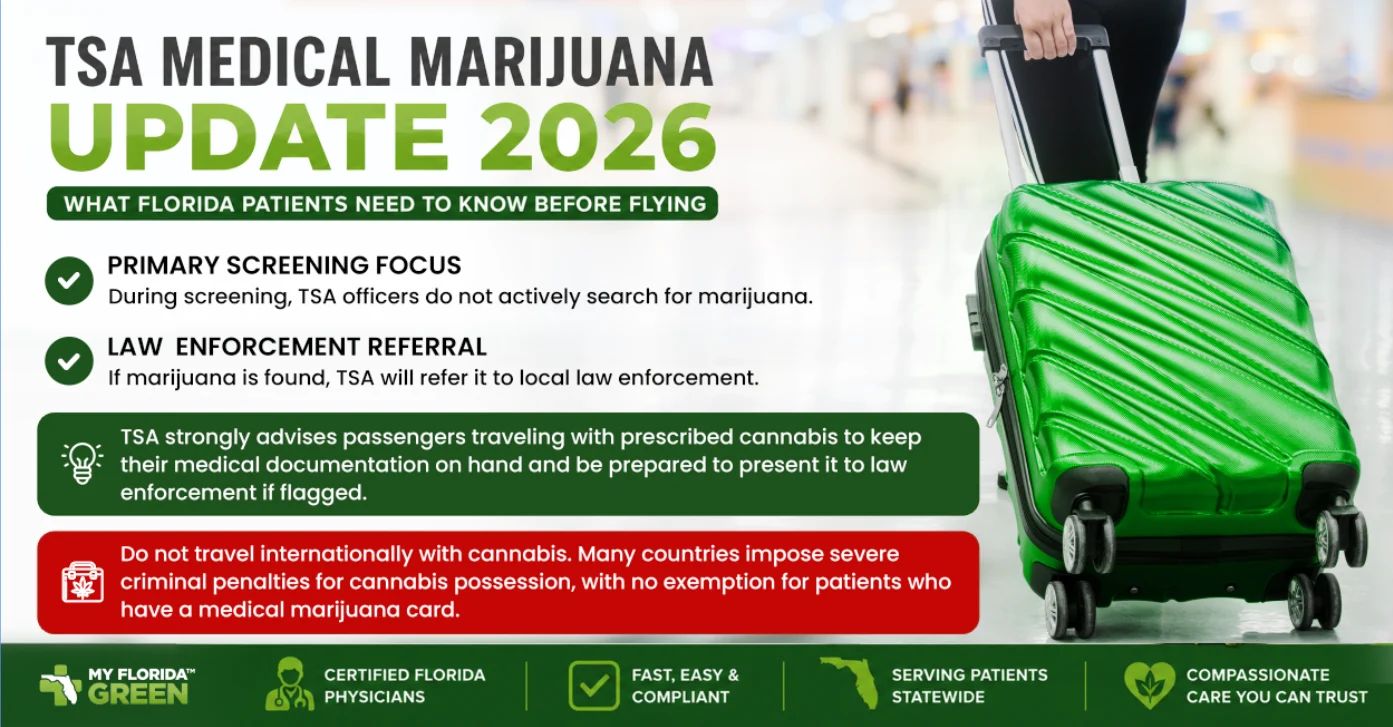
Transporting cannabis across state lines remains a federal offense, regardless of state-level legalization. Even if both the departure and arrival states have legalized cannabis, crossing state boundaries violates federal law. Additionally, some states prohibit open containers or require products to be sealed and stored in trunks.
Penalties for non-compliance range from civil fines to criminal charges. Understanding the specific consequences in each jurisdiction helps assess the risk. Some areas offer diversion programs for first-time offenders, while others impose strict mandatory minimums for possession above legal limits.
Travelers should treat cannabis laws as a variable that changes with every border crossed. Staying informed through official state resources is the most reliable way to ensure compliance.
Common questions on federal law
Navigating the intersection of state legalization and federal prohibition requires clear distinctions. Cannabis remains a Schedule I controlled substance under federal law, meaning it is classified alongside drugs with no accepted medical use and a high potential for abuse. This federal status persists regardless of individual state policies.
No comments yet. Be the first to share your thoughts!