

Federal status and state realities
Navigating cannabis laws requires understanding a fundamental disconnect: while many states have legalized cannabis, the federal government maintains a strict prohibition. This dual system creates a complex compliance landscape for consumers, businesses, and lawmakers alike. As of 2026, the gap between state permissions and federal statutes remains wide, meaning that legality is entirely dependent on your jurisdiction.
The Federal Baseline
At the federal level, cannabis is classified as a Schedule I controlled substance under the Controlled Substances Act. This classification indicates that the Drug Enforcement Administration (DEA) considers cannabis to have a high potential for abuse and no currently accepted medical use in treatment in the United States. Consequently, manufacturing, distributing, or possessing cannabis remains a federal crime, regardless of state laws.
This federal stance has not changed despite widespread public support for reform. While enforcement priorities may shift depending on the current administration, the underlying legal framework remains intact. For instance, banking regulations tied to federal law often restrict financial services for cannabis-related businesses, creating operational hurdles that do not exist for other legal industries.
State-Level Legalization
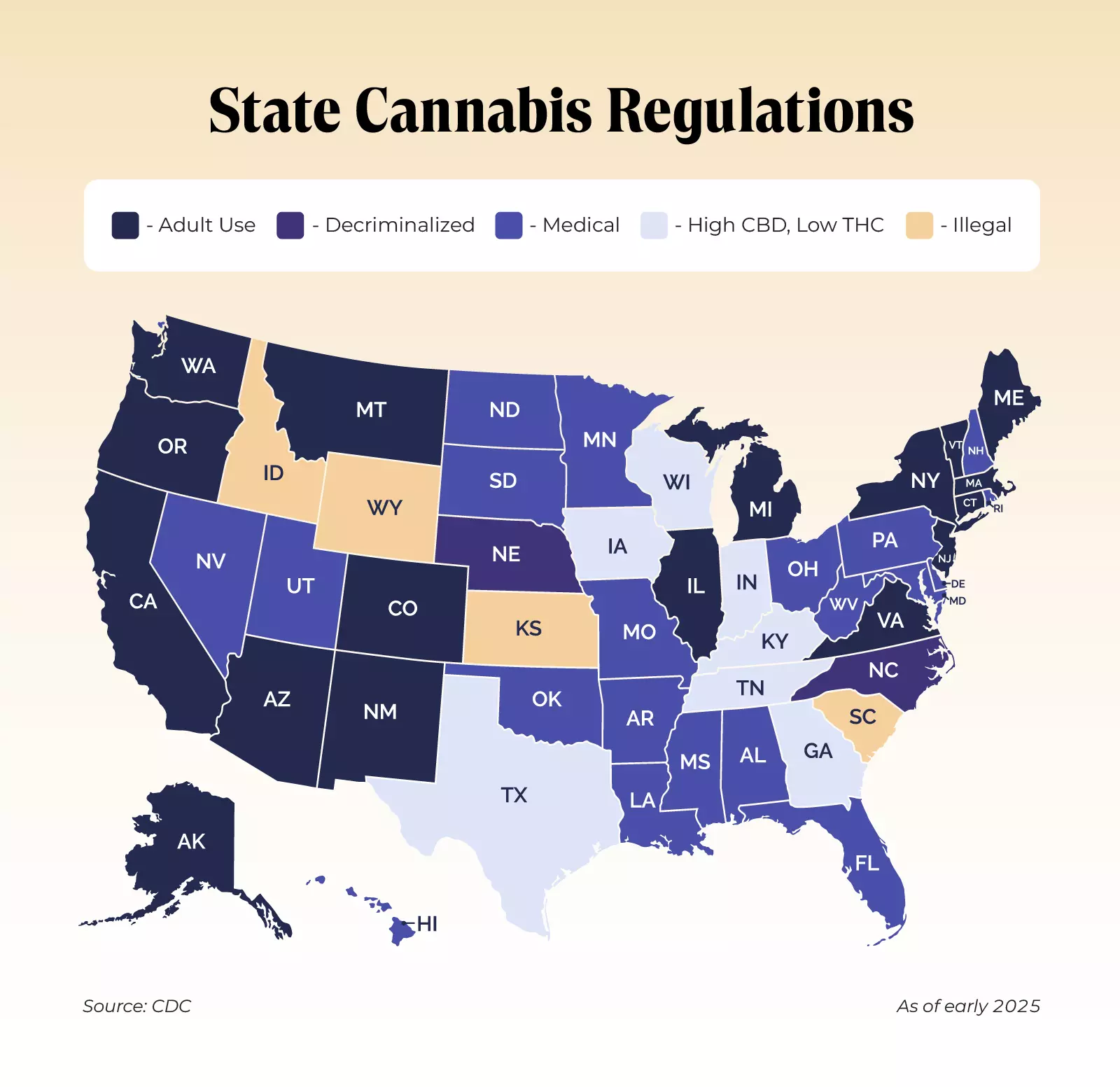
In contrast to federal prohibition, individual states have taken varying approaches to cannabis regulation. According to the National Conference of State Legislatures (NCSL), as of early 2026, 24 states, three territories, and the District of Columbia allow or regulate cannabis for non-medical use by adults. Additionally, 42 states have legalized cannabis for medical use, though the specifics of those programs—such as qualifying conditions and product types—vary significantly.
This patchwork of regulations means that a product legal in one state may be illegal in the next. For example, while states like California and Colorado have established robust recreational markets, others maintain strict medical-only programs or have not legalized cannabis at all. Travelers and interstate commerce must navigate these boundaries carefully, as federal law generally preempts state laws in areas of direct conflict, particularly regarding transportation across state lines.
Understanding this disconnect is essential for anyone involved in the cannabis industry or consuming cannabis products. While state laws provide a framework for legal access within specific borders, federal prohibition ensures that cannabis remains a legally sensitive issue on a national scale. As legal updates continue to emerge, staying informed about both federal proposals and state-specific regulations is crucial for compliance.
Tracking legalization milestones
The path to the 2026 cannabis laws landscape has been defined by a steady expansion of state-level access alongside persistent federal stagnation. By the start of 2026, medical cannabis was legal in 42 of the 50 states, while recreational use had been legalized in 24 states. This growth reflects a decade of ballot initiatives and legislative actions that have fundamentally shifted public policy, even as the federal government maintains a prohibitionist stance.
Early milestones set the precedent for modern regulation. Colorado and Washington became the first states to legalize recreational cannabis in 2012 via ballot measures. Since then, a wave of approvals has swept through the Northeast, Midwest, and Southwest. However, progress is not uniform. Some states have seen legalization bills stall in committee, while others have repealed or restricted previous allowances. For example, in Pennsylvania, the House passed a legalization bill (HB 1200) in a party-line vote on May 7, 2025, but the measure faced significant hurdles in the Senate, illustrating the ongoing political friction in many jurisdictions.
The current legal environment is a patchwork of state laws that often conflict with federal Schedule I classification. While the Department of Justice has issued guidance limiting enforcement in compliant states, the lack of federal reform means businesses and consumers must navigate a complex web of regulations. Tracking these state-level changes is essential for understanding where cannabis is accessible and where legal risks remain high.
Key state law variations
While federal shifts create a broad backdrop, cannabis laws in the United States remain strictly governed by state statutes. This fragmentation means that legality in one jurisdiction does not guarantee compliance in a neighboring one. Regulations regarding possession limits, home cultivation, and commercial sales vary significantly, requiring users to verify local rules before acquiring or consuming cannabis.
The following comparison highlights how three representative states—New York, New Jersey, and California—differ in their current regulatory frameworks. These examples illustrate the spectrum of state-level approaches, from strict possession caps to more permissive home grow allowances.
| State | Possession Limit | Home Grow Allowed | Sales Status |
|---|---|---|---|
| New York | Up to 3 oz flower | Yes (up to 3 plants, 3 mature) | Legal adult-use |
| New Jersey | Up to 6 oz | Yes (up to 6 plants) | Legal adult-use |
| California | Up to 1 oz flower | Yes (up to 6 plants) | Legal adult-use |
Data reflects general adult-use statutes as of 2025. Specific local ordinances may impose stricter limits. Sources: New York Cannabis Law Overview, New Jersey Cannabis Regulation, California Cannabis Control.
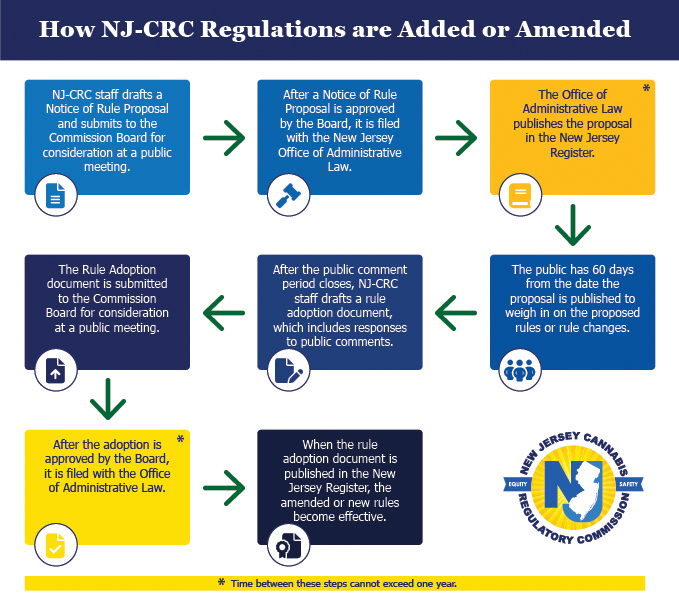
The visual below, sourced from New Jersey’s official cannabis regulatory body, outlines the procedural flow for compliance and regulation within the state. Such official flowcharts are useful for understanding the administrative steps required for legal operation or possession verification.
How to stay compliant with cannabis laws
Cannabis regulations shift frequently, and local ordinances often differ from state-level statutes. To navigate these changes without legal exposure, treat compliance as a continuous verification process rather than a one-time check. The following steps outline how to verify current rules in your jurisdiction.
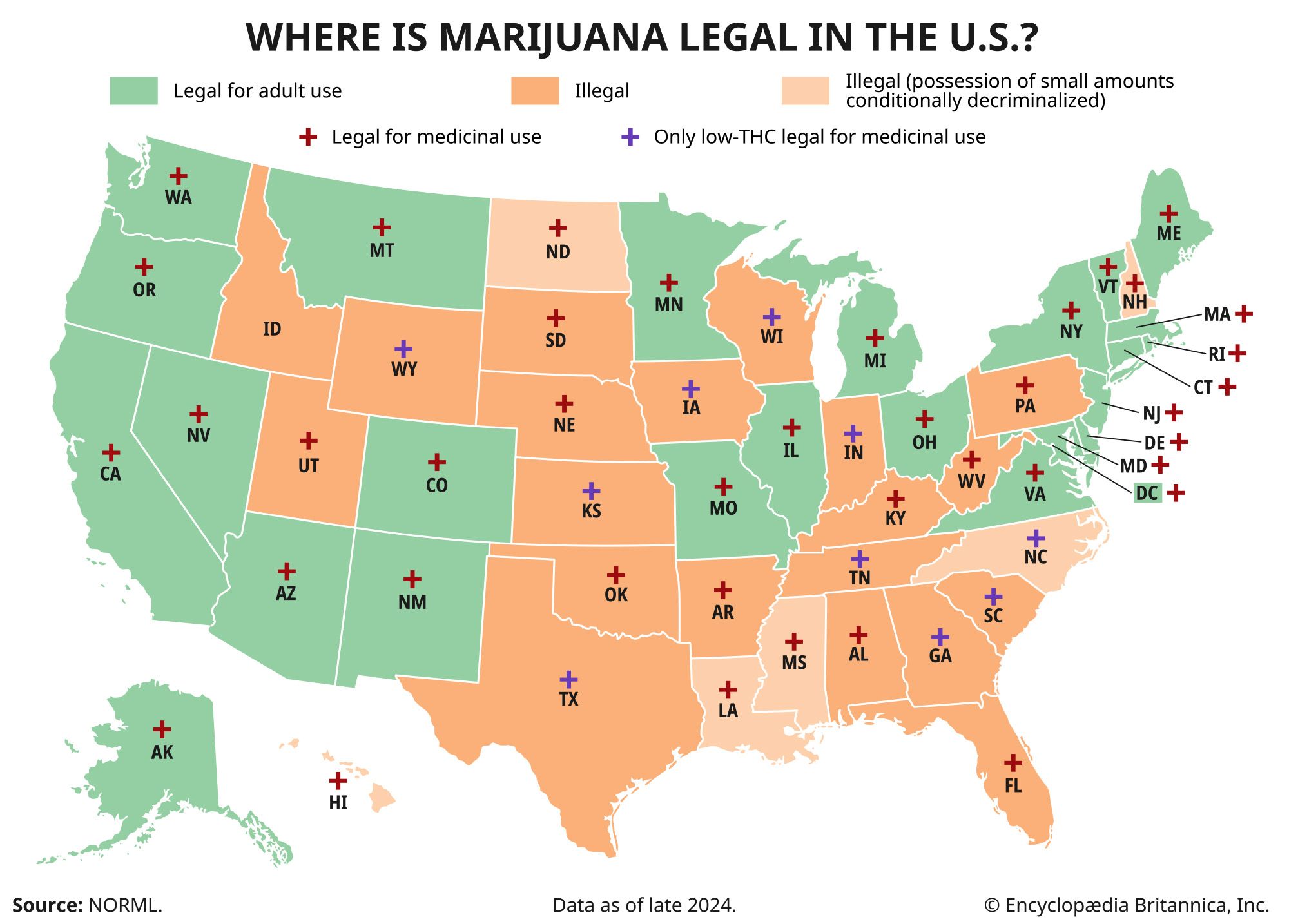
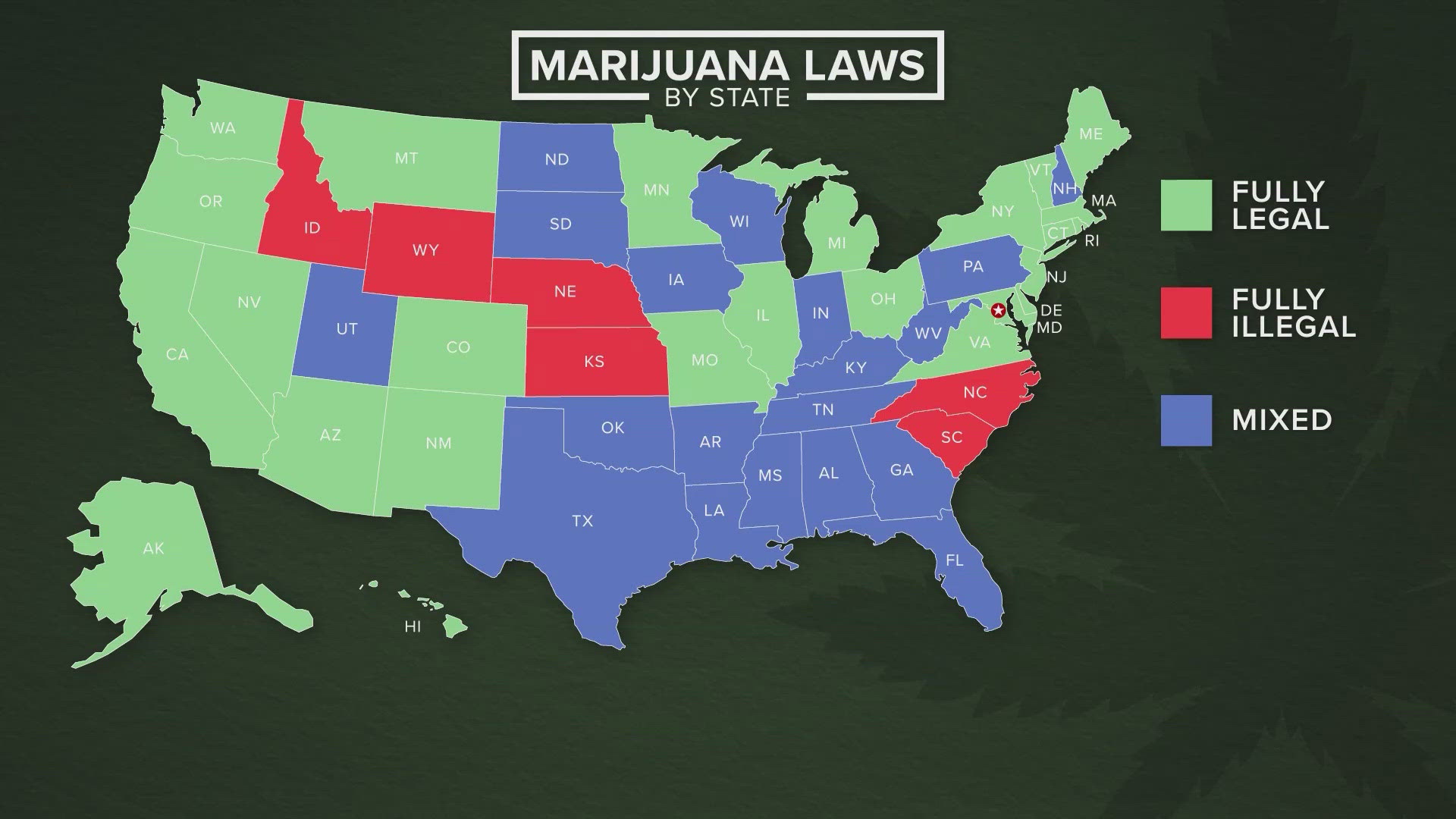
Start by confirming whether your state has legalized recreational or medical cannabis. The Insurance Institute for Highway Safety (IIHS) maintains a comprehensive table of marijuana laws that tracks these changes. Use this resource to establish the baseline legality before looking at local restrictions.
State permission does not guarantee local allowance. Many counties and cities ban retail dispensaries or prohibit consumption in multi-unit housing. Consult your city clerk’s website or local municipal code to ensure your specific neighborhood permits cannabis activities.
Each jurisdiction sets strict caps on how much cannabis you can hold or grow. These limits often vary between medical and recreational users. Verify the exact gram or plant counts allowed to avoid accidental violations that could lead to fines or criminal charges.
Even in states where cannabis is legal, public consumption is generally prohibited. This includes parks, sidewalks, and vehicles. Some jurisdictions also restrict smoking or vaping near schools or playgrounds. Check local ordinances to identify designated consumption areas or private property rules.
Laws evolve rapidly, with new bills passing and old ones being amended. Subscribe to updates from your state’s health department or cannabis control board. Regular monitoring ensures you remain aware of any sudden shifts in enforcement priorities or regulatory frameworks.
Common questions about cannabis laws
Navigating the intersection of federal and state regulations can be confusing. Below are answers to frequent questions about legality, home use, and jurisdictional differences as of 2026.
These distinctions highlight why understanding your specific jurisdiction is critical. Always verify current state statutes, as laws continue to evolve.
No comments yet. Be the first to share your thoughts!