

The rise of automated grows
Home cannabis cultivation is changing rapidly. What was once a fairly analog pursuit—relying on intuition and experience—is becoming increasingly data-driven. Growers are seeking precision, consistency, and higher yields, and traditional methods often fall short of delivering these things reliably. The appeal is understandable; a controlled environment minimizes risk and maximizes potential.
Cheap sensors and accessible AI are driving this shift. While California's Department of Cannabis Control has tightened rules since the 2019 CDFA updates, the demand for tech that bypasses human error is only climbing. Growers want tools that work, regardless of the regulatory hurdles.
AI represents the next logical step in this evolution. It’s not about replacing the grower, but about augmenting their knowledge and skills with powerful analytical tools. This means moving beyond simply monitoring conditions to predicting potential problems and proactively optimizing the growing environment. It’s about taking the guesswork out of cannabis cultivation and empowering growers to achieve consistently exceptional results.
Sensors are the foundation
At the heart of any smart growing system is a network of sensors. These devices continuously monitor critical environmental and soil parameters, providing a constant stream of data. Environmental sensors are particularly important, tracking temperature, humidity, carbon dioxide levels, and light intensity—all factors that dramatically influence plant growth. Light sensors, for example, can measure PPFD (Photosynthetic Photon Flux Density), a key metric for optimizing photosynthesis.
Soil sensors provide insights into the root zone, measuring moisture levels, pH, and nutrient concentrations. Understanding these factors is crucial for ensuring plants receive the right amount of water and nutrients at the right time. There are even sensors capable of detecting specific nutrient deficiencies by analyzing the electrical conductivity of the soil. The more comprehensive the sensor suite, the more detailed the picture of the plant's needs.
However, simply collecting data isn’t enough. The quality of that data is paramount. Inaccurate or unreliable sensors will lead to flawed analysis and suboptimal growing conditions. It's a simple equation: data in equals results out. Investing in high-quality, calibrated sensors is a fundamental step toward successful smart growing. Regularly checking calibration and ensuring proper placement are also essential for maintaining data integrity.
AI analysis and control
The real power of smart growing comes from the application of artificial intelligence to the data collected by sensors. AI algorithms can analyze this data to identify patterns, predict trends, and optimize growing conditions in ways that a human grower simply couldn’t. This isn’t about replacing human intuition, but about giving growers a powerful tool to enhance their decision-making.
One crucial application of AI is predictive modeling. By analyzing historical data and current conditions, AI can forecast potential problems like nutrient deficiencies or pest infestations before they become severe. This allows growers to take preventative measures, minimizing losses and maximizing yields. For example, the system might predict a calcium deficiency based on pH levels and plant growth rate, prompting the grower to adjust the nutrient solution.
Many advanced systems utilize closed-loop control systems. In these systems, AI doesn’t just recommend adjustments; it automatically makes them. Based on sensor data, the AI can control lighting schedules, watering cycles, ventilation rates, and other parameters to maintain optimal conditions. This level of automation frees up the grower to focus on other aspects of the cultivation process. I’m not entirely sure about the specifics of the algorithms used here, but the outcome is consistently improved control and efficiency.
These systems are becoming more sophisticated. Some platforms integrate data from multiple sources—including historical weather patterns, strain genetics, and even real-time market prices—to create highly customized growing strategies. The goal is to optimize not just yield, but also cannabinoid profiles and terpene production.
Automated nutrient management
AI is profoundly changing how nutrients are delivered to cannabis plants. Traditional nutrient feeding often relies on generalized schedules or the grower’s best guess. AI-powered systems, however, can personalize nutrient solutions based on a multitude of factors, including the plant’s stage of growth, the specific strain being cultivated, and even the prevailing environmental conditions.
This precision feeding approach offers several benefits. It minimizes nutrient waste, reducing costs and environmental impact. It also leads to increased yields and improved product quality, as plants receive exactly what they need, when they need it. Automated dosing systems, controlled by the AI, ensure accurate and consistent nutrient delivery. These systems can blend and deliver customized nutrient solutions on demand.
Reducing nutrient runoff is another significant advantage. By optimizing nutrient delivery, AI helps prevent excess nutrients from leaching into the environment. This is not only environmentally responsible but also helps maintain the health of the growing medium. The potential for reducing water usage is also substantial, as precise nutrient management minimizes the need for flushing.
The ability to fine-tune nutrient delivery based on real-time plant feedback is a game-changer. Some systems even incorporate sensors that analyze plant sap to determine nutrient uptake rates, allowing for even more precise adjustments.
Predicting pests and disease
Early detection is critical when it comes to pests and diseases. AI and computer vision are proving to be invaluable tools in this area. These technologies can analyze images of plants to identify subtle changes in appearance that might indicate the presence of a problem—changes that a human grower might miss in the early stages.
Image recognition technology is used to “train” the AI to recognize the visual signatures of common pests and diseases. The system learns to identify patterns in leaf discoloration, spotting, or insect presence. This allows for rapid and accurate diagnosis, even before symptoms become widespread. Regular image capture—perhaps using automated cameras—can provide a continuous stream of data for analysis.
Beyond visual detection, AI can also predict outbreaks based on environmental conditions and historical data. By analyzing temperature, humidity, and other factors, the system can assess the risk of pest or disease development and alert the grower to take preventative measures. This proactive approach is far more effective than reactive treatments. Preventative measures, like introducing beneficial insects or adjusting ventilation, can be implemented before an infestation takes hold.
Current smart growing systems
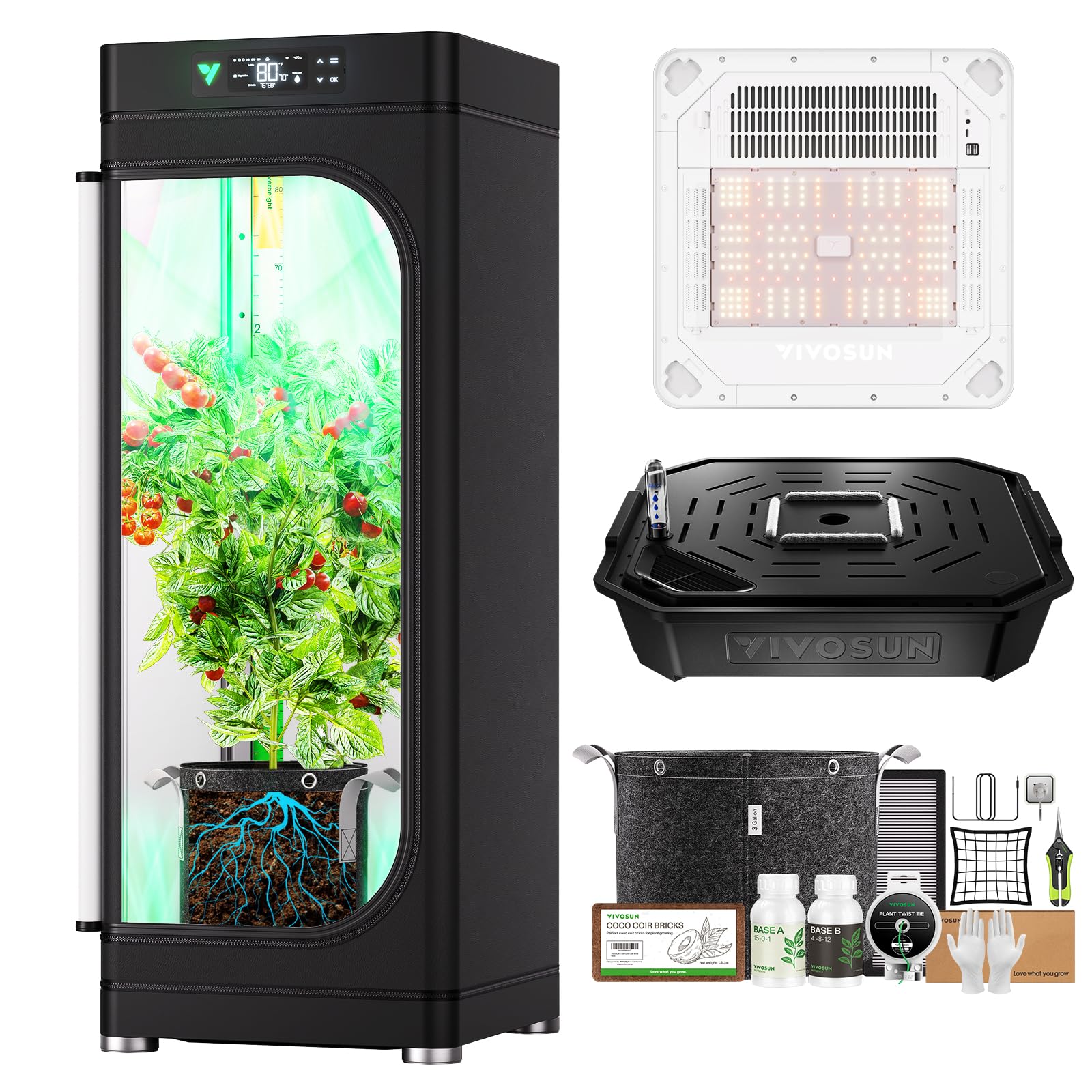
The market for smart growing systems is expanding rapidly, with a range of options available to suit different needs and budgets. These systems generally fall into a few broad categories. Some are all-in-one solutions, providing a complete ecosystem of sensors, controllers, and software. Others are modular, allowing growers to customize their setup by adding individual components as needed.
One type of system focuses on environmental control, automating temperature, humidity, and lighting. These systems are relatively affordable and easy to set up, making them a good choice for beginners. More advanced systems incorporate nutrient management and pest/disease detection. These tend to be more expensive but offer a higher level of automation and control.
Some systems are designed for specific grow methods, such as hydroponics or aeroponics. These systems often include specialized sensors and controllers tailored to the unique requirements of those methods. It’s important to consider your existing setup and growing style when choosing a system. Ease of use is another key factor. Some systems require significant technical expertise, while others are designed to be user-friendly even for novice growers.
The market moves too fast to pin down a single 'best' brand, but look for hardware that prioritizes sensor calibration over flashy app interfaces. A system is only as good as its support team when a sensor fails mid-bloom.
- Environmental control systems manage the basics like heat, humidity, and light cycles.
- Nutrient management tools automate the feeding schedule to prevent over-saturation.
- Integrated platforms tie everything together, including pest alerts and remote monitoring.
Comparison of Smart Growing System Types for Home Cannabis Cultivation (2026)
| System Type | Cost | Complexity | Scalability | Data Analysis |
|---|---|---|---|---|
| DIY Sensor Kits (e.g., Raspberry Pi based) | Lowest - typically under $300 for basic components | High - Requires significant technical expertise in electronics, programming, and data interpretation. | Limited - Expanding beyond a small grow space requires substantial additional investment and configuration. | Basic - Relies on user-defined thresholds and alerts. Data visualization often requires custom scripting. |
| Pre-built Environmental Controllers | Low to Moderate - $300 - $1500 depending on features and capacity | Moderate - Requires some understanding of environmental control principles, but generally user-friendly setup. | Moderate - Can often manage multiple zones or a small-to-medium sized grow room. | Moderate - Often includes data logging and basic charting, but advanced analysis may require exporting data to external software. |
| All-in-One Automated Systems | Moderate to High - $1500 - $5000+ depending on size and automation level | Low to Moderate - Designed for ease of use with guided setup and automated controls. | Moderate to High - Systems are available for various grow sizes, with some offering modular expansion options. | Good - Typically includes integrated data logging, trend analysis, and potentially predictive algorithms for optimizing growth parameters. |
| Cloud-Based Software Platforms (integrated with hardware) | Subscription-based - Costs vary widely, potentially $50 - $500+/month depending on features and plant count | Moderate - Requires hardware integration and a reliable internet connection, but software interface is generally intuitive. | High - Designed to manage large-scale operations, but can be scaled down for home use. | Advanced - Leverages AI and machine learning to provide detailed insights, automated adjustments, and optimized growth recipes. Often includes remote monitoring and control. |
| Hybrid Systems (Combination of hardware and cloud software) | Moderate to High - Initial hardware cost + ongoing subscription fees | Moderate - Requires integration of different components, but often simplifies data analysis and control. | Moderate to High - Scalability depends on the hardware and software capabilities. | High - Combines the benefits of local control with the power of cloud-based analytics and automation. |
Illustrative comparison based on the article research brief. Verify current pricing, limits, and product details in the official docs before relying on it.



No comments yet. Be the first to share your thoughts!